Fashion Games 2026
Six Hours. One Table of Scraps. Twenty Designers with Something to Prove. Welcome to the fourth annual Fashion Games.
Every year, the fashion industry produces 92 million tonnes of textile waste. Only 8 per cent of textile fibres today come from recycled sources. Those numbers are staggering. But numbers don't change industries. People do.
Which is exactly why, on a Saturday morning in Vancouver, twenty emerging designers showed up — nervous, competitive, ready — to prove that fashion's future doesn't need more fabric. It needs better ideas.
The Fashion Games is LaSalle College Vancouver's annual sustainable design competition — where designers from institutions across BC are challenged to create a complete garment using only textile waste, in a single day.
HOUR 0 — Let the Games Begin
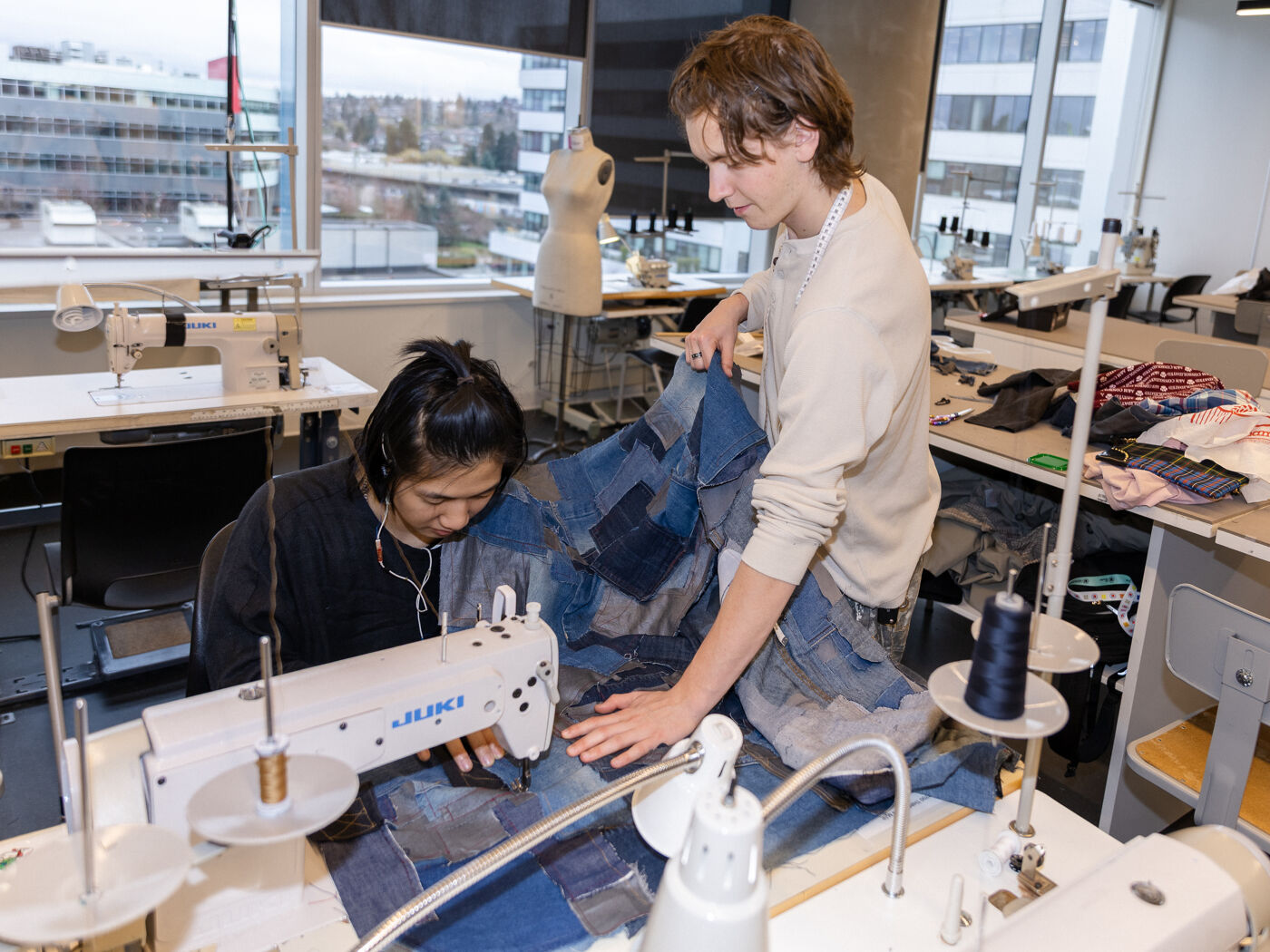
The scene could have been pulled straight from Project Runway. A countdown. A table stacked with marathon t-shirts, denim, and zippers in every colour. And then — go.
Designers sprinted toward that table like the competition depended on it. Because it did.
"At first I was really nervous because everyone was taking the garments," said Ghalia. "Especially the denim — it ran out really fast. But I managed to grab one."
This was the fourth edition of an event that began as Ana D'Carvalho's graduation project five years ago — and a question she couldn't let go of: what if designers looked at waste and saw possibility? Today, Ana leads LaSalle's Fashion Design program. And four editions later, that answer was standing right here in this room.
Watch the full story unfold — Episode 1 · Episode 2
The first crucial hours
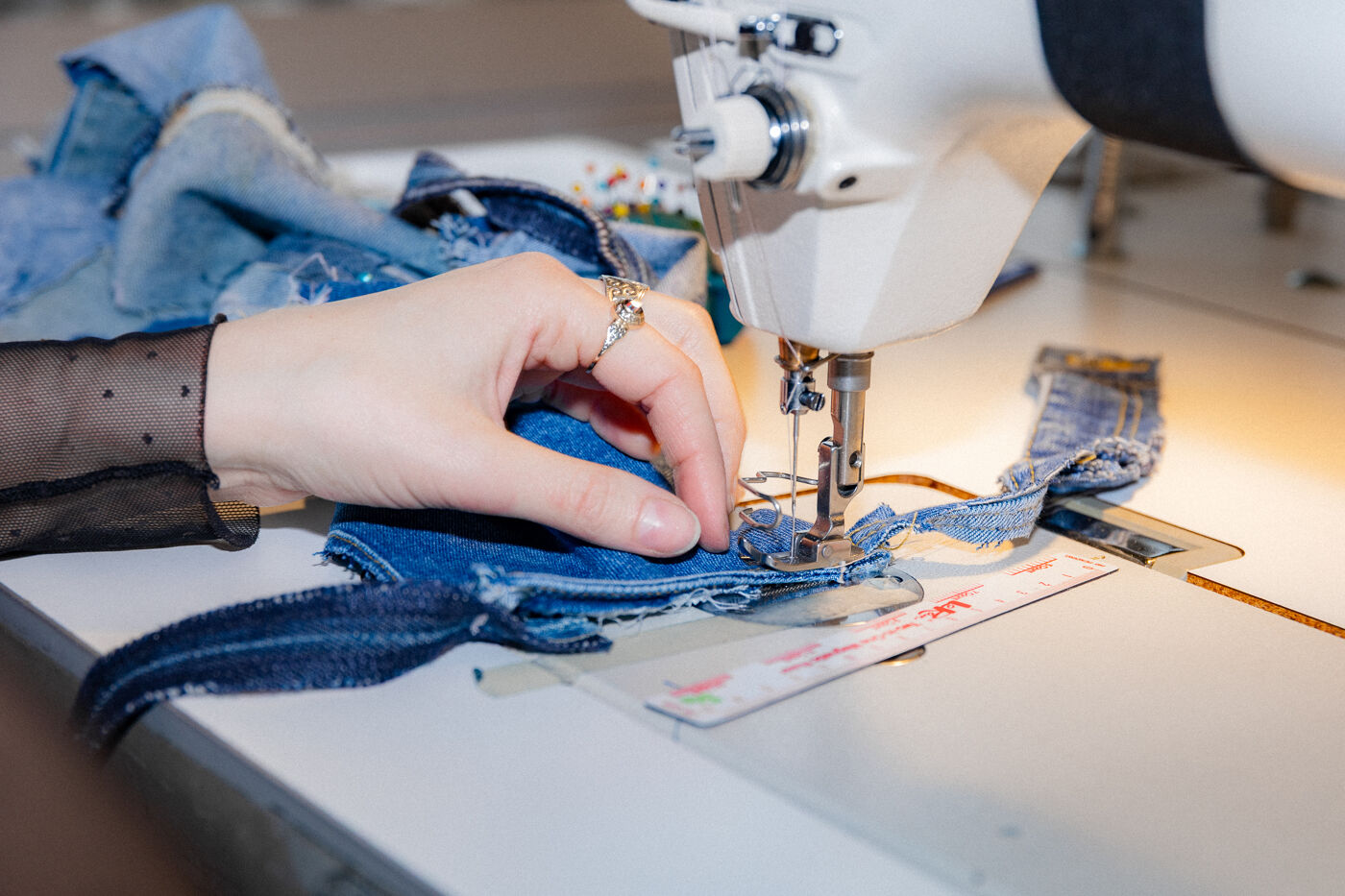
The day before, an upcycling workshop had given them a head start — deconstruction, strip-cutting, patchwork, reconstruction — a toolkit for whatever the day demanded.
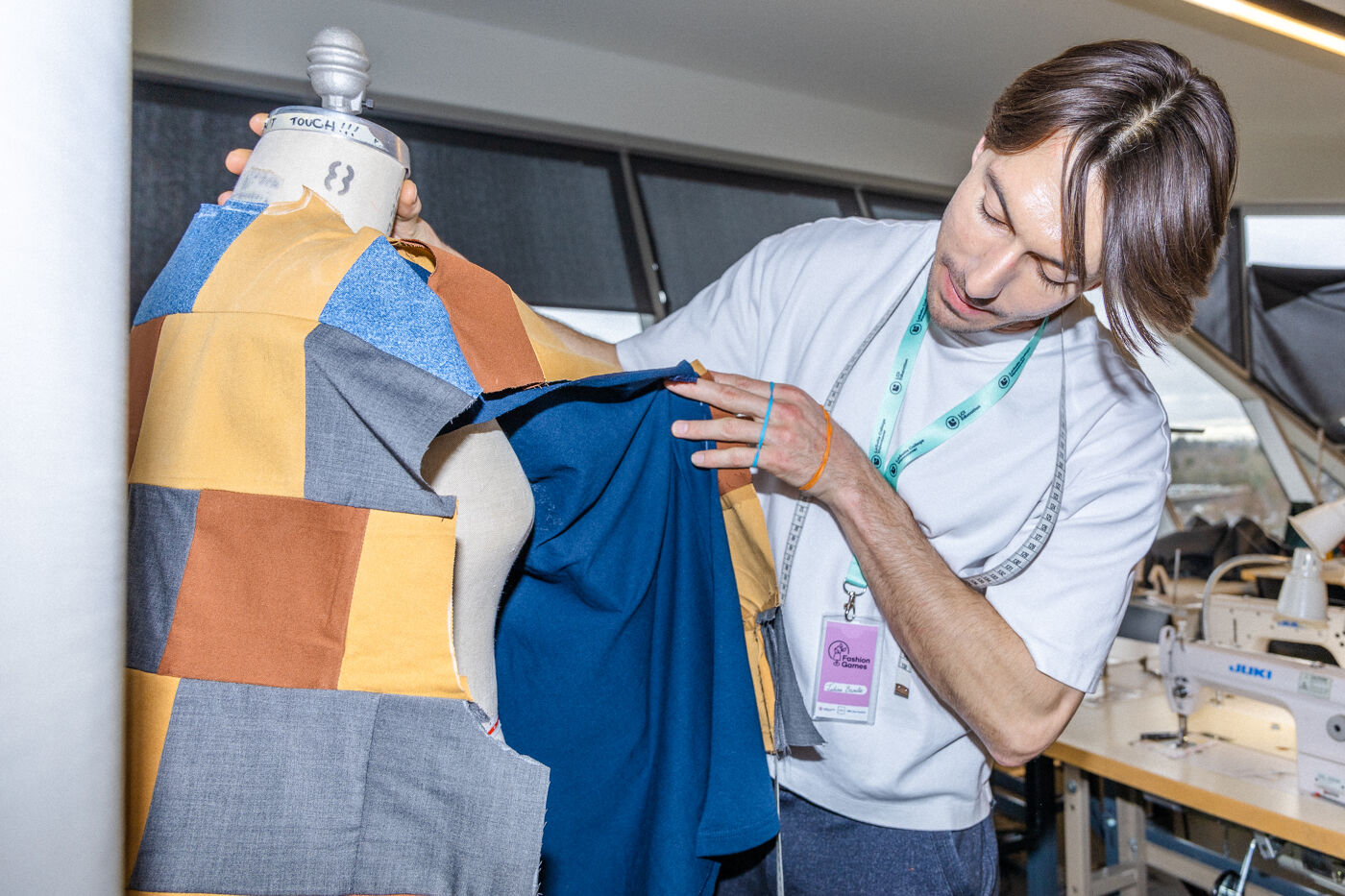
Around the room, strategies were already taking distinct shapes. Julian was building a patchwork bodice — boxy, quilted, deliberately oversized — with plans to use every remaining scrap for the lining of a matching bag. "There will be zero waste if I have time," he said with a grin. Karl was weaving zippers by hand into a fitted top, each one carefully tucked, with a deconstructed-pants skirt to follow.
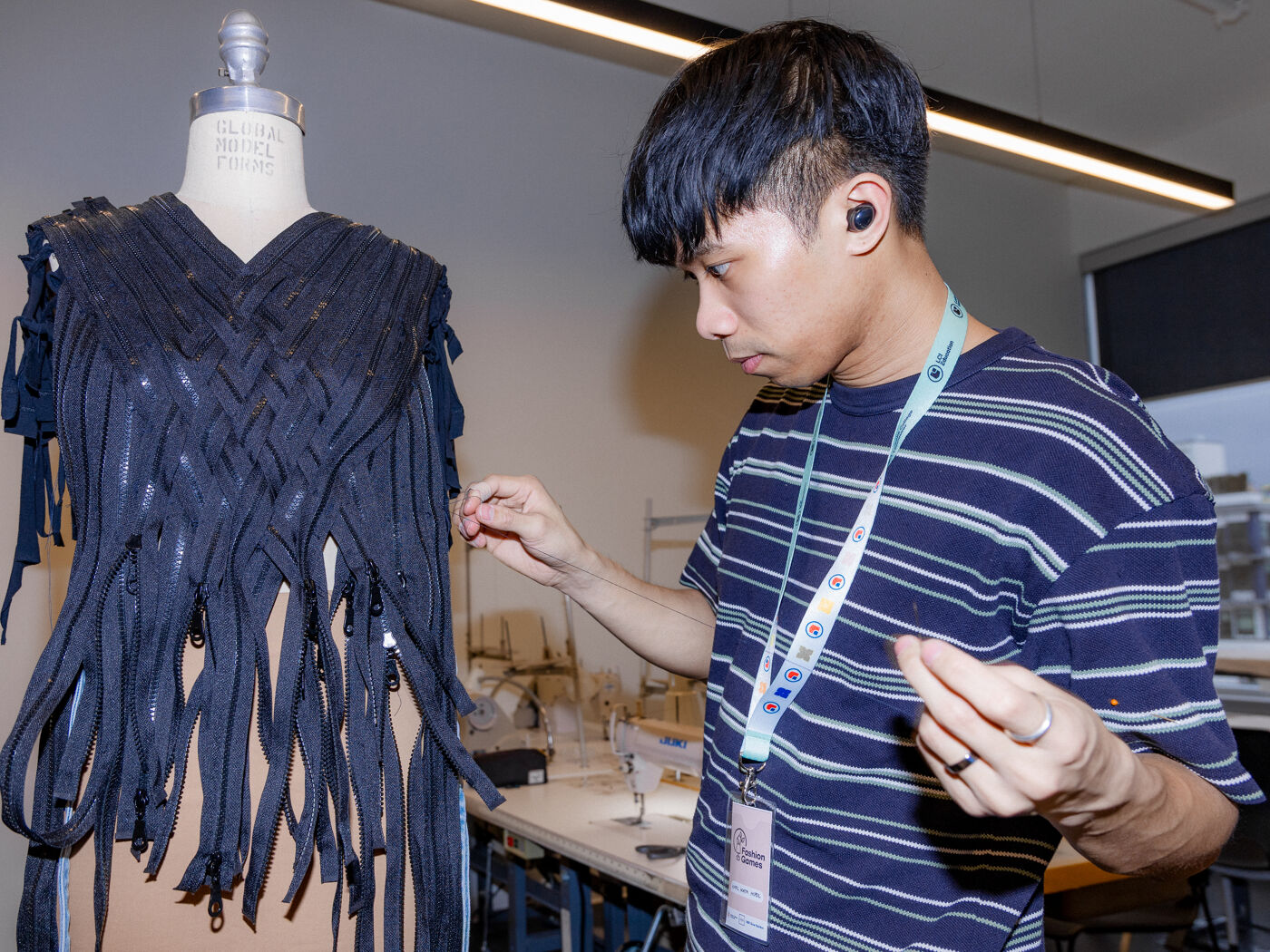
HOUR 4 — The Room Finds Its Rhythm
By midafternoon the panic had lifted. Something quieter had taken its place — concentration, momentum, the particular focus of people who had stopped second-guessing and started making.
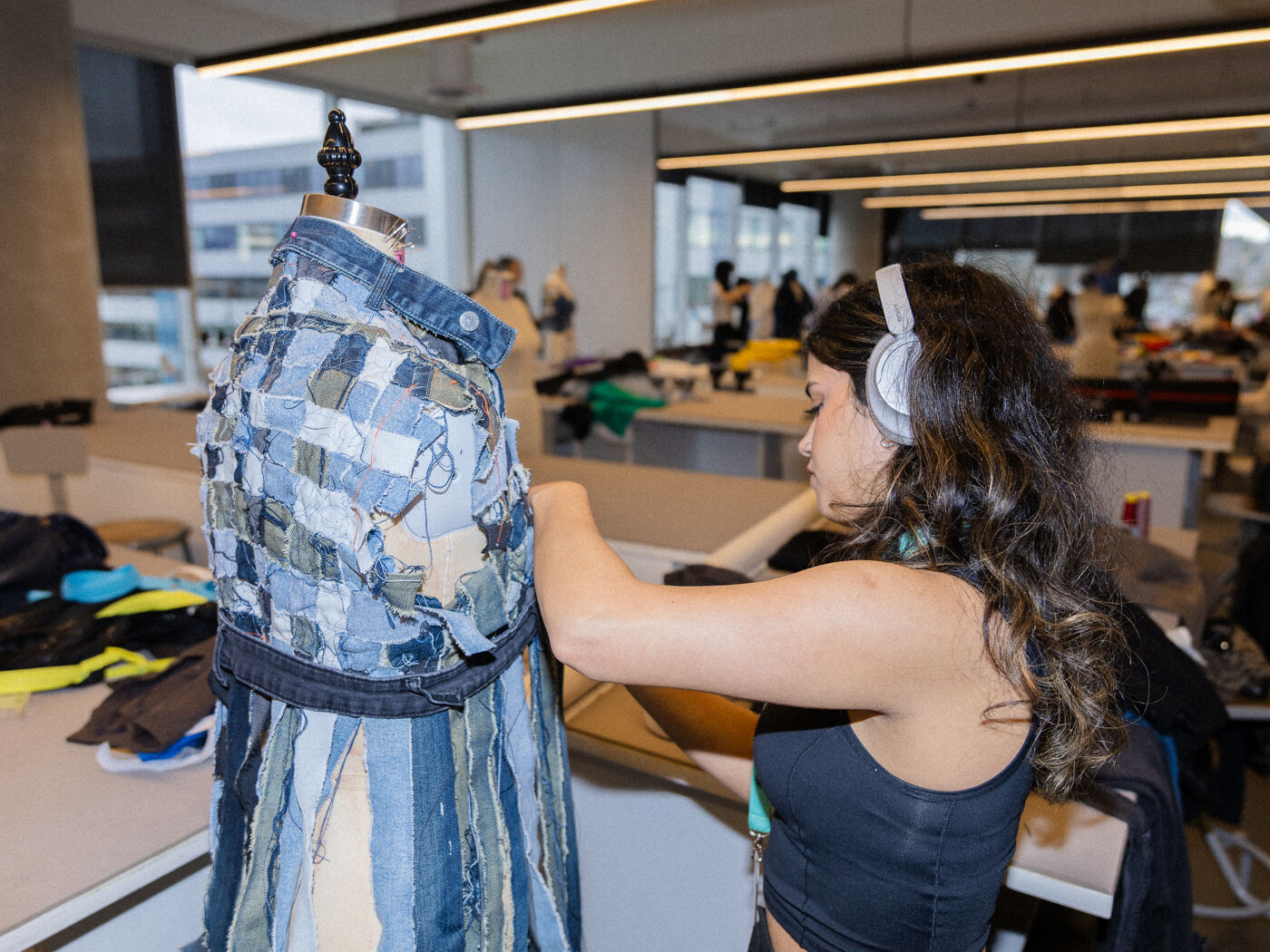
"We're all just trying to have fun and make the best of the time we have," Alivia said, barely looking up. Around her, discards had become silhouettes. Scraps had become structure. What the industry had thrown away was, piece by piece, becoming fashion.
Sarah put the philosophy of the whole day into one sentence: "People worked really hard on that stitching. I think it deserves to be seen."
That's not just a design choice. That's a worldview.
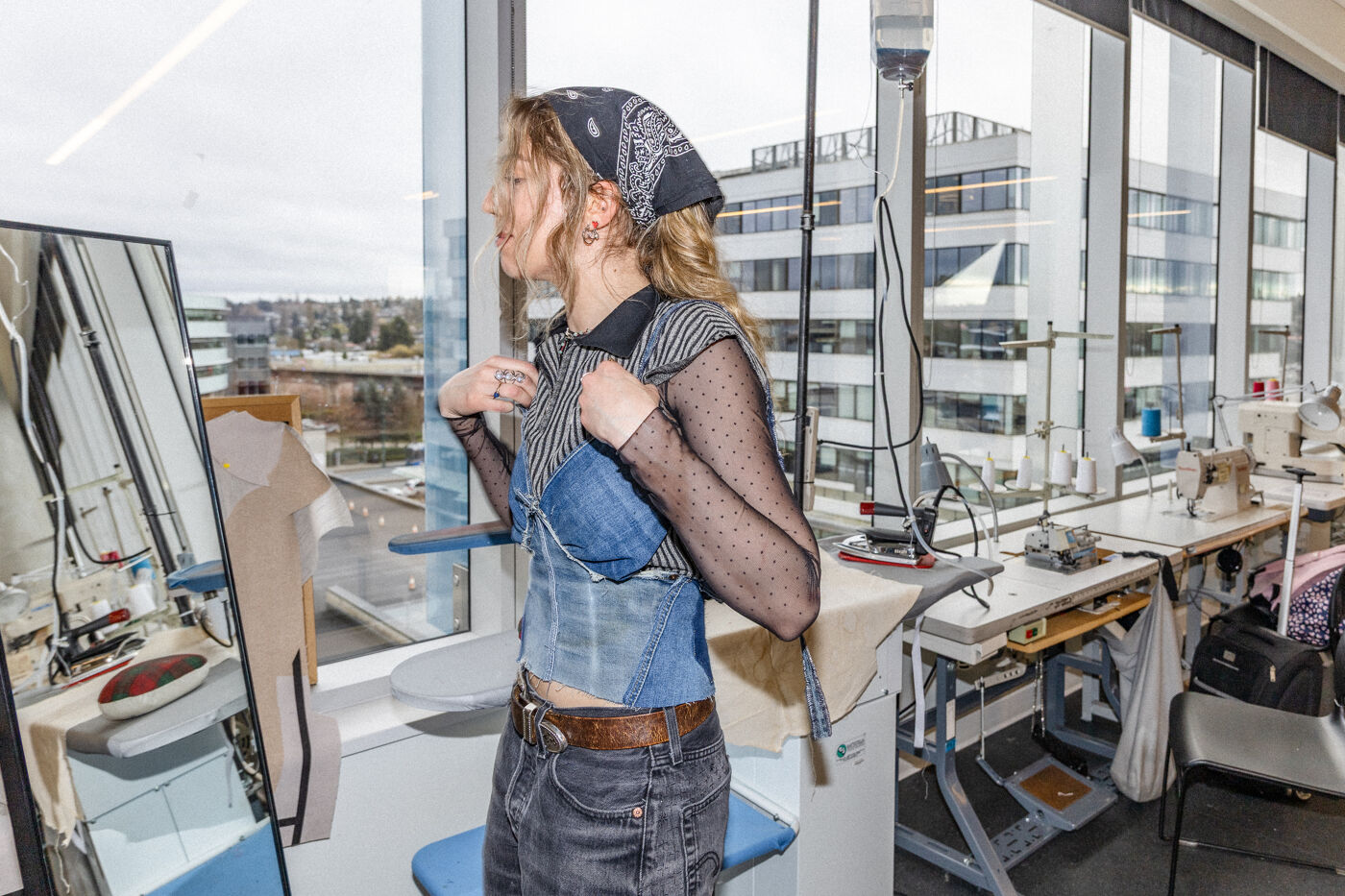
5:00 PM — The Moment of Truth
The machines went quiet. The garments went up. Six industry judges — from Holt Renfrew, Arteryx, DeBrand, and Fashion Revolution — walked the room with fresh eyes and real stakes. Not looking for perfection. Looking for vision.
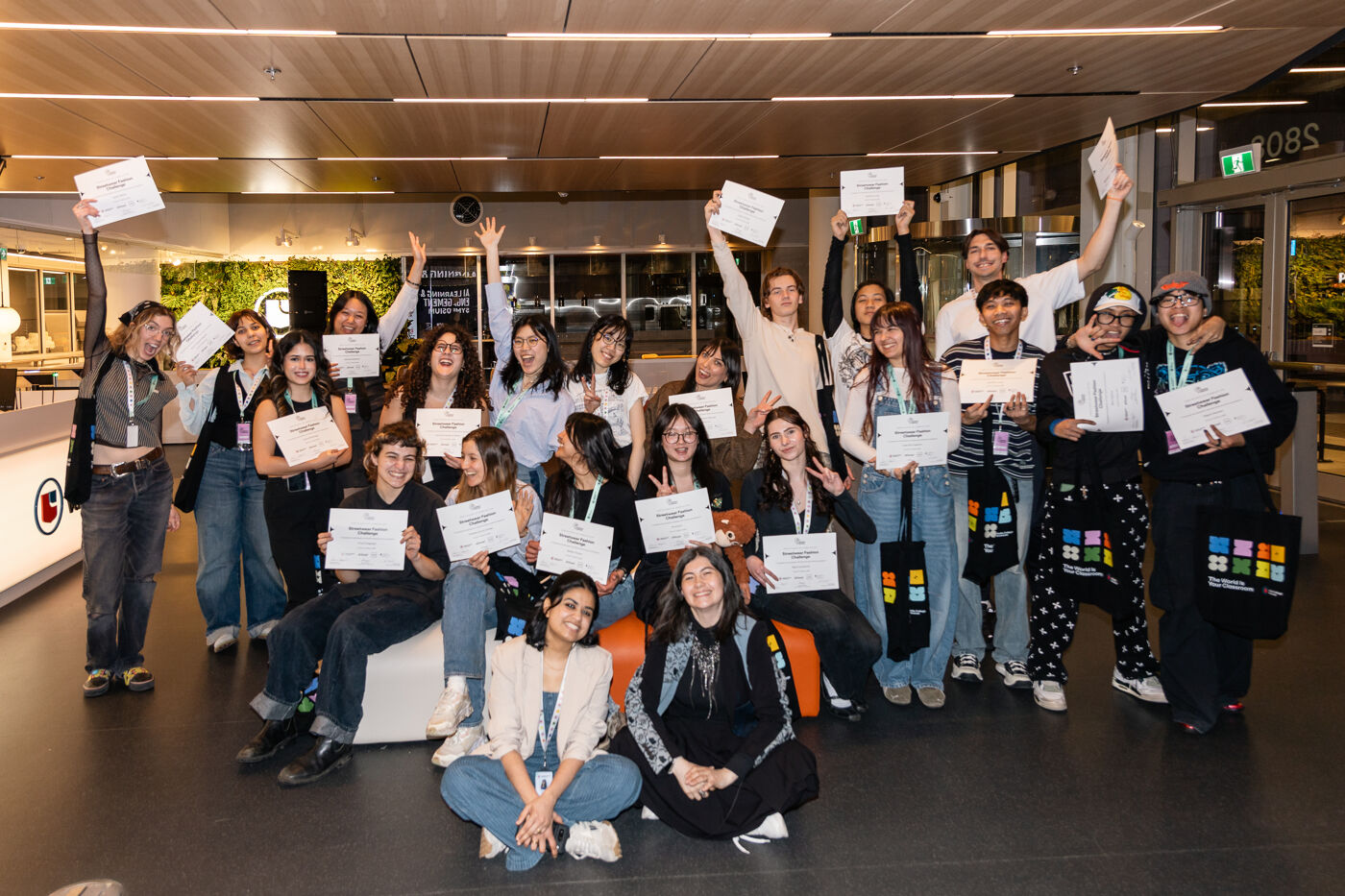
First place went to María Teresa Castro Montiel from JCI Institute Inc. Second place to Celine Moshfeghi, one of our own from LaSalle College Vancouver. Then came the wildcard: the People's Choice Award — a public vote run through LaSalle's official Instagram, open to anyone who had followed the competition from the outside and wanted their say. The internet had seen the work. Now it weighed in — and it chose Malika Chopra from Emily Carr University of Art and Design.
Winning didn't end with a certificate. It opened a door. On March 12, the top winners carried their designs to the Museum of Anthropology at UBC — walking the runway at the Slow Fashion Season showcase, a collaboration with UBC Slow Fashion that placed waste-born student garments inside one of Vancouver's most iconic cultural spaces.
From a pile of scraps — to a runway at MOA.
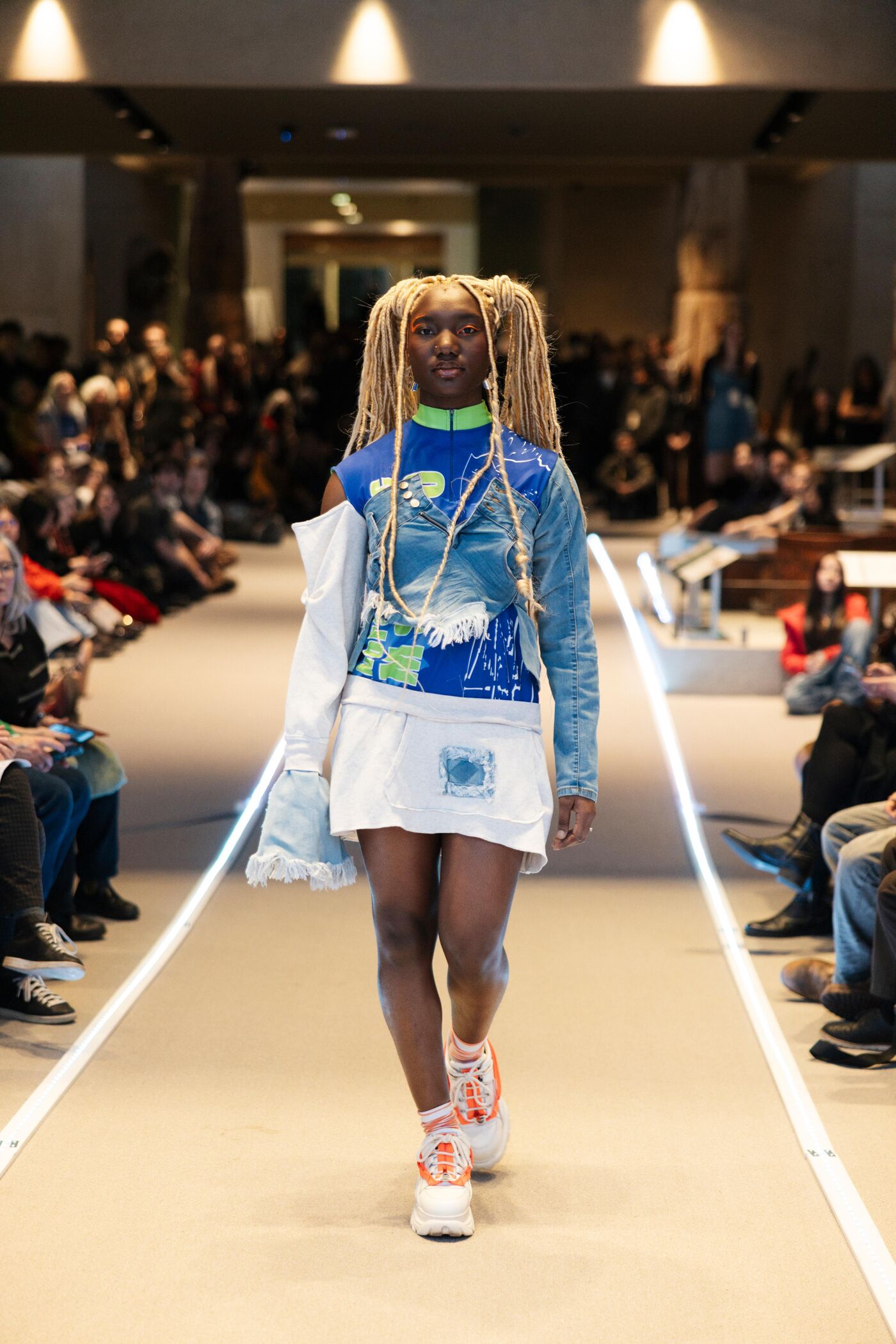


And for one more year, the Fashion Games proved its founding promise: that waste, in the right hands, becomes something worth seeing.
"I wanted to push designers to work with the old, the reused, the undervalued — embracing constraints as a source of creativity rather than limitation," Ana said. That philosophy didn't live in a classroom. It lived in this room. In LaSalle's Fashion Design program, sustainability isn't an elective. It's the foundation.